23 Nov 2026
Meet Mark Beamish: Engineering power around the application
From a family battery business in Perth to developing custom battery systems and Battery Management Systems (BMS) for demanding industrial applications, Mark Beamish has spent decades turning battery technology into practical power solutions.
For Mark Beamish, battery engineering has never been about the battery alone. It starts with understanding what the customer needs to power, where the equipment will operate, the conditions it must withstand and how the complete system needs to perform.
Today, Mark leads the Perth operation of MI Battery Engineering, where engineering and manufacturing expertise supports customers across mining, marine, defence and other demanding industrial applications.
His approach to engineering was shaped long before he formally entered the industry.

An engineering career that started at home
Mark's father came to the battery industry through aviation. Having worked on British military aircraft and later in avionics, he eventually settled with his family in Western Australia, where he established an industrial battery business with a $5,000 bank loan.
The operation started at home before expanding into premises in Osborne Park. Mark grew up around it, helping his father with battery assembly and other workshop jobs from an early age.
“It was hard slog,” Mark recalls. “I was about 12 or 13 when I started helping my father build battery packs. One of my jobs was mixing battery electrolyte in an old bathtub. It was a crappy job because it used to fizz and heat up,” he laughs.
Despite that early introduction, joining the family business wasn't initially part of his plan.
Mark started studying accounting, quickly realised it wasn't for him, and spent time travelling and working overseas. His direction changed when his father encouraged him to undertake technical training with a German battery manufacturer.
There, he learned about battery chemistry, construction and electrode production, but also something that would shape his career: how to select and engineer batteries around different applications and load profiles.
He eventually returned to Perth, initially expecting to work in the family business for about a year. Instead, he progressed through production, workshop management and technical sales before taking over the business when his father retired.
By then, the company had developed specialist capabilities, including programmable battery chargers and high-temperature batteries for downhole oil and gas applications.
In 2012, the business joined Master Instruments, now MI Battery Engineering.
The acquisition brought together Mark's established battery engineering expertise with MI's broader manufacturing resources, technical infrastructure and national reach. It also laid the foundations for the Perth operation's continued development of custom-engineered battery and power solutions.
Custom battery engineering starts with the application
For Mark, the starting point in battery engineering is not the battery specification. It's the application.
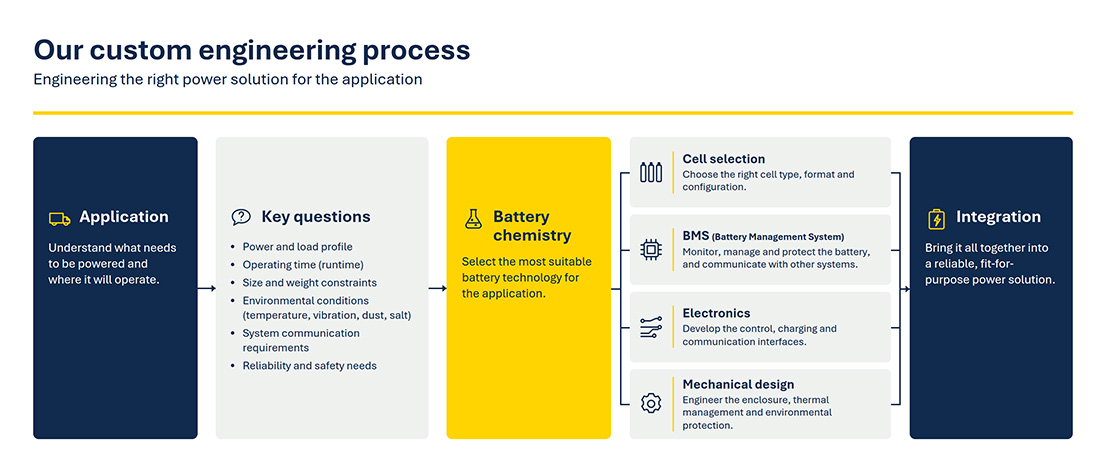
What does the equipment need to do? How much power does it require, and for how long? What temperatures, vibration or environmental conditions will it encounter? How will the battery communicate with the wider system?
Only after understanding those requirements does the engineering team move towards battery chemistry, cell selection, Battery Management Systems, electronics and mechanical design.
“You can't change the laws of physics and chemistry. Some technologies are better for some jobs and some solutions work better for other jobs,” Mark explains.
That is why MI Battery Engineering takes a chemistry-agnostic approach, evaluating different technologies rather than starting with a predetermined product.
Sometimes an existing battery is the right solution. Sometimes it needs modification. And sometimes the application requires an entirely custom-engineered system.
The same philosophy shapes Mark's relationship with customers.
“It's a partnership. It's not a transaction.”
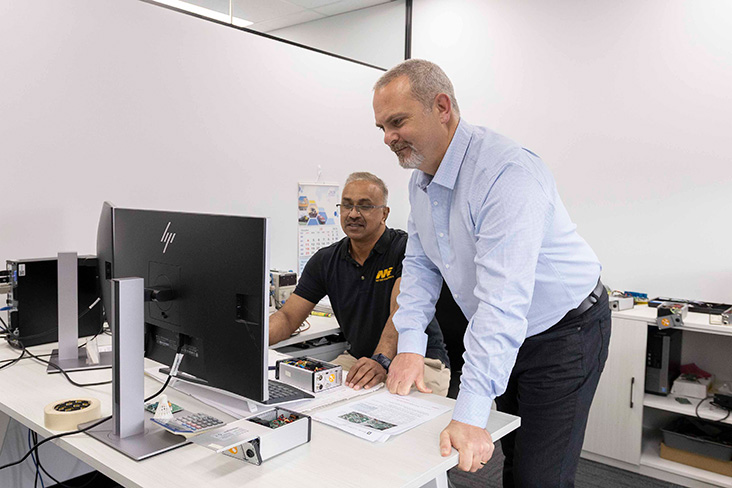
For complex industrial applications, that partnership can involve working alongside the customer's engineering team through design, integration, testing and ongoing refinement.
The objective isn't simply to supply a battery that meets a specification. It's to develop a power system that works reliably as part of the customer's equipment.
Beyond the battery: BMS expertise in action
One of MI Battery Engineering's key technical strengths is Battery Management System (BMS) design and development.
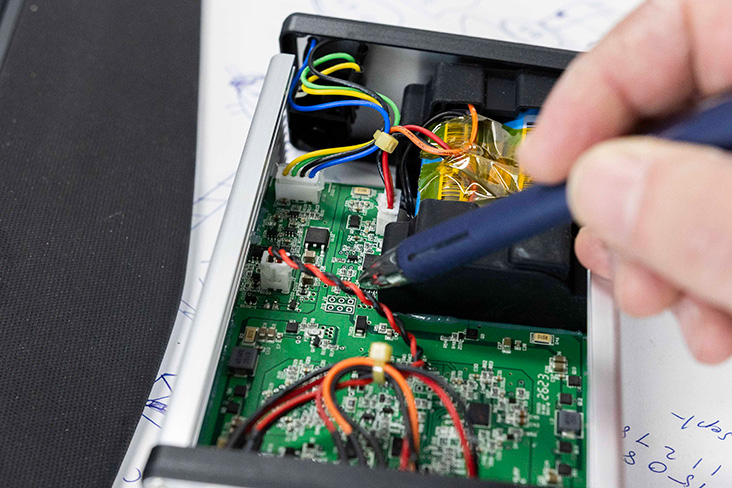
A BMS monitors and manages how a battery operates, including voltage, current, temperature, charging, protection and communication with other equipment. For complex applications, these functions must be engineered around the requirements of the complete system.
MI Battery Engineering has developed its own proprietary BMS designs and also works with specialist international technologies, giving its engineers the flexibility to select, customise and integrate the right solution.
“You really need to understand how the product works to be able to specify a BMS properly,” Mark explains.
That expertise proved critical in a mining vehicle project where an imported battery initially appeared to meet the customer's requirements.
Integrating it into the vehicle, however, presented a different challenge.
MI developed a programmable BMS solution to communicate with the vehicle's systems, control charging through the alternator regulator and report battery status. The team also redesigned the enclosure, cooling and mechanical protection to withstand vibration, dust and other demanding operating conditions.
“We changed so much that there wasn't a lot of the original battery left,” Mark recalls.
The customer ultimately chose to manufacture the redesigned battery locally.
The project demonstrates the value of bringing together BMS development, electronics and communications integration, mechanical engineering and manufacturing expertise. Rather than making the vehicle accommodate an existing battery, the team engineered the battery system around the vehicle.
The technology changes. The engineering principle doesn't.
Battery technology has advanced enormously throughout Mark's career. New chemistries, higher energy densities and increasingly sophisticated Battery Management Systems are creating opportunities for applications that were once impractical.
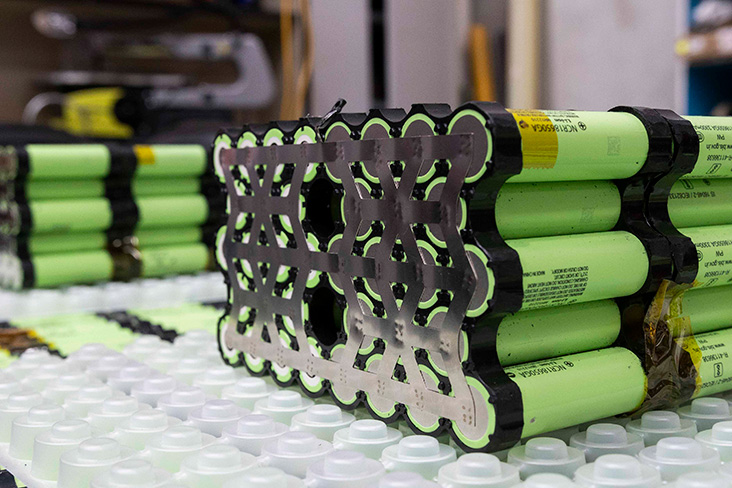
At MI Battery Engineering, the team continues to evaluate emerging technologies, including sodium-ion batteries, and undertake laboratory testing to understand their performance and suitability for demanding environments.
For Mark, however, innovation only has value when it delivers a better outcome for the customer.
“My job is to put available technologies into a real-world application.”
That philosophy also underpins MI Battery Engineeing’s commitment to retaining battery engineering capability in Australia. While cells and components may come from global suppliers, the ability to design, integrate, test, manufacture and support complex power systems locally remains critical.
It is the approach Mark has followed throughout his career and one that continues to shape MI Battery Engineering today: combining deep battery knowledge, BMS expertise and Australian engineering capability to develop power solutions around real operating requirements.
Because successful battery engineering isn't about having the latest technology. It's about knowing how to make the right technology work for the application.
Looking for a custom battery or power solution?
MI Battery Engineering works with OEMs, engineering teams and industrial customers to develop application-specific battery systems, including custom battery pack design, Battery Management Systems, integration, testing and manufacturing.